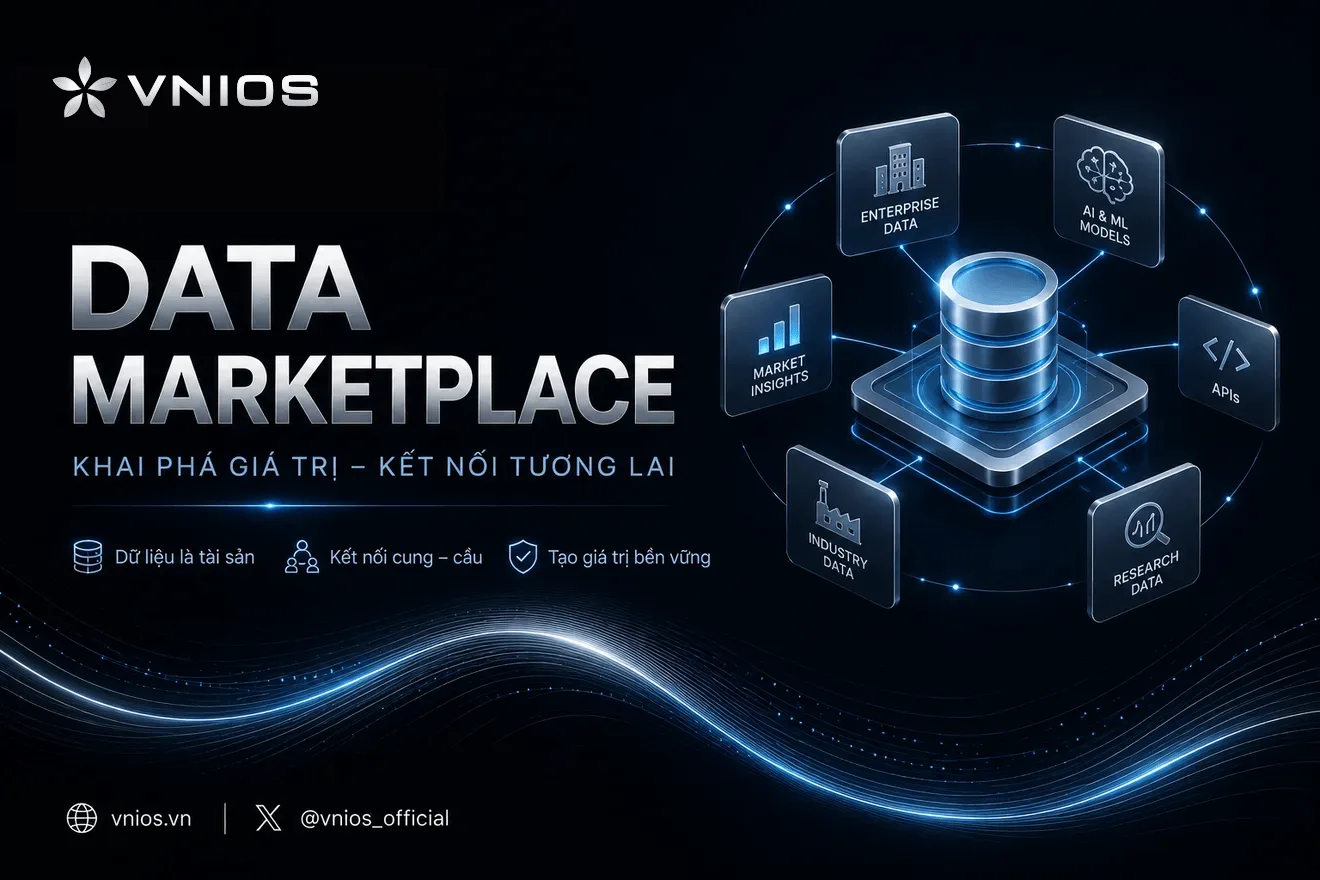
For many years, when we think about investment or asset accumulation, most of us imagine real estate, gold, stocks, or other financial instruments.
But the world is changing very fast.
In the digital era, data is gradually becoming a new type of asset — one capable of generating economic value on par with capital, technology, or human resources.
Every day, billions of transactions, interactions, and business activities take place in the digital environment. All of them generate data.
From customer data, market data, and production data, to logistics, finance, and scientific research data — all of it is becoming the raw input of the digital economy.
Many countries have already begun to regard data as a strategic national resource.
No longer just information to be stored or reported, data today can be shared, licensed, bought, sold, exchanged, and used to create real economic value.
The AI Era Drives a Surge in Data Value
If data was already important a few years ago, the explosion of AI is making its role larger than ever.
AI cannot function without data.
Every AI model — from chatbots and financial analysis systems to enterprise assistants and self-driving vehicles — needs data to be trained and to operate.
This creates enormous demand for:
- High-quality data
- Specialized domain data
- Data with verifiable provenance
- Continuously updated data
- AI-ready data
In the future, the competitive edge of many businesses will lie not only in technology or capital, but also in the ability to own and leverage data.
It can be said that data is gradually becoming the "fuel" of the AI economy.
Vietnam Stands Before a Major Opportunity
Vietnam is entering a new phase of development in which science and technology, innovation, and digital transformation have been identified as key drivers of national growth.
From strategic orientations on the digital economy, AI development, and national digital transformation, to promoting the innovation ecosystem, data is clearly playing an increasingly central role.
However, the reality is that the majority of data today remains scattered across individual enterprises, organizations, and separate systems.
Many organizations own valuable data but do not yet know how to leverage it.
Meanwhile, many businesses, startups, and research institutions struggle to access the data sources they need.
This gap is creating demand for a new layer of infrastructure in the data economy.
What Is a Data Marketplace?
Just as e-commerce connects buyers and sellers of goods, a Data Marketplace connects data owners with those who need to use data.
Through a Data Marketplace, organizations can:
- Publish and showcase data
- Grant data access rights
- Share data in a controlled manner
- Provide Data APIs
- Commercialize data assets
- Connect with AI and technology partners
On the other side, businesses, startups, researchers, and AI development organizations can easily search for and access the data sources that suit their needs.
In other words, a Data Marketplace acts as a "data market" — a place where data circulates more efficiently within the economy.
Opportunities Come with Challenges
Despite the enormous potential, building a data economy is not simply a matter of creating a trading platform.
Significant challenges still lie ahead:
- Inconsistent data quality
- Lack of standardization across systems
- Data ownership and licensing
- Security and privacy
- Trust among market participants
This is also why many countries are investing heavily in data standards, data governance mechanisms, and national data infrastructure.
The challenge is not merely having data, but figuring out how data can be shared, leveraged, and turned into value in a safe and sustainable way.
The Future of the Data Economy
In the near future, data may come to be viewed in much the same way as other important asset classes in the economy.
Businesses that own high-quality data will enjoy a greater competitive advantage.
Nations that build effective data infrastructure will have more opportunities to lead in the AI era.
For Vietnam, this is not only an opportunity to adopt new technology — it is also an opportunity to form entirely new data-driven economic sectors.
A Data Marketplace, therefore, is not merely a technology platform.
It is one of the key building blocks of tomorrow's digital economic infrastructure — a place where data can be connected, circulated, and transformed into value for businesses, communities, and the economy as a whole.
 Written byNDA-IOS Team