As the Ecosystem Grows, Program Operations Become More Complex
Vietnam is witnessing rapid growth in innovation support programs.
From accelerators, incubators, hackathons, and grant programs to fellowships and residencies, more and more organizations are stepping in to support startups, founders, and promising technology projects. Universities, corporations, government agencies, investment funds, innovation centers, and startup support organizations are all building their own programs to drive ecosystem growth.
Yet as the number of programs increases, a new challenge has begun to emerge. Most programs today are still operated through a combination of email, spreadsheets, application forms, task-management tools, and various disconnected platforms. Startup information sits in one place, mentors are managed somewhere else, while documents, schedules, evaluations, and reports each live on separate systems.
As programs scale, managing and coordinating all of this becomes increasingly complex.
That is exactly why Program OS was built.
From Fragmented Tools to a Unified Platform
Program OS is the digital infrastructure that helps organizations design, operate, and scale innovation support programs on a single unified platform.
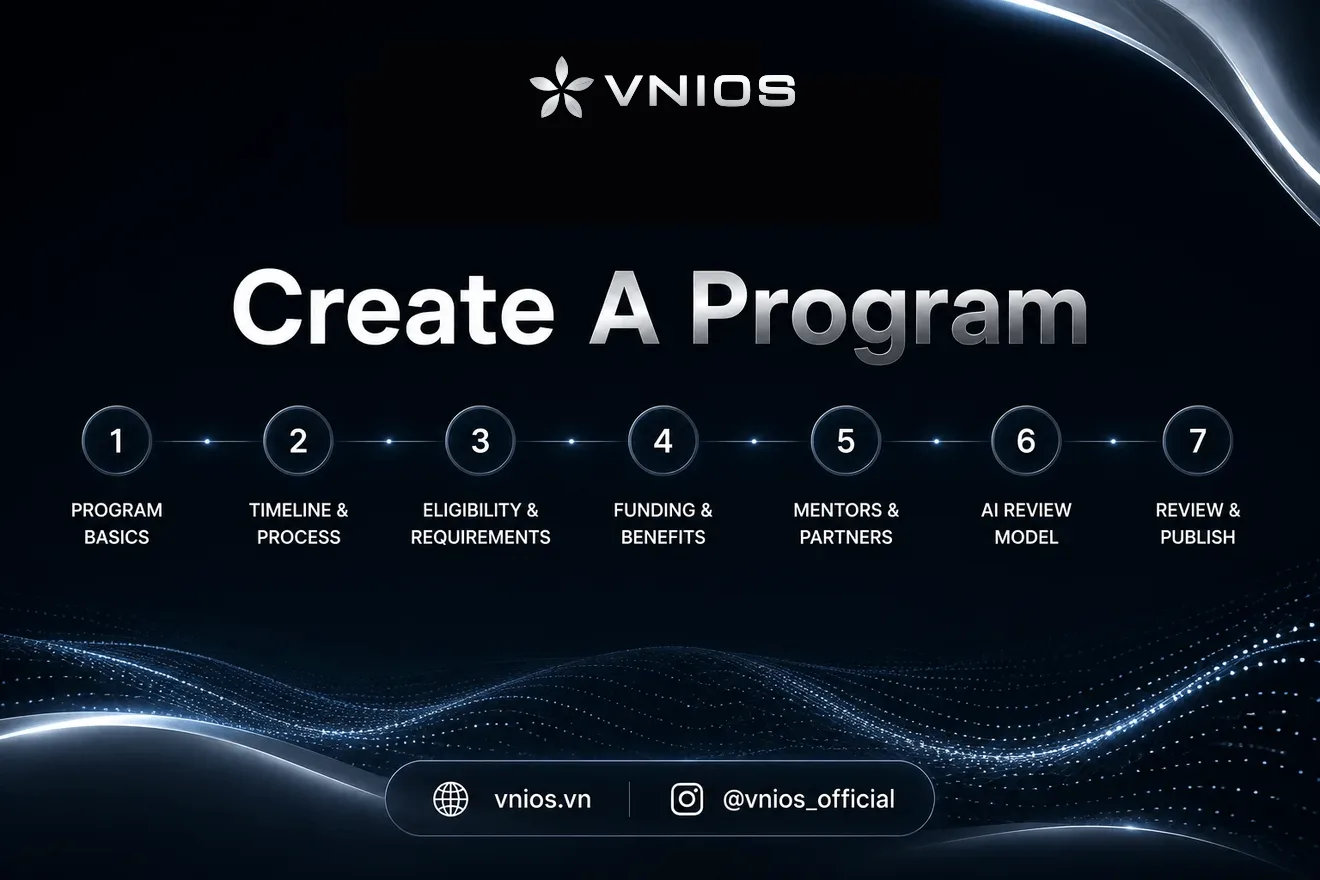
Instead of piecing together multiple tools, organizations can manage the full lifecycle of a program — from recruitment, application review, and mentor management to activity coordination, resource allocation, and final outcome tracking — all in one place.
The goal of Program OS is not simply to digitize operational workflows. The goal is to help organizations spend more time creating real impact for startups, rather than handling administrative tasks and manually coordinating across multiple systems.
One Platform for Many Program Types
Every organization takes a different approach to supporting innovation.
Some focus on accelerators to help startups grow quickly. Others build incubators to nurture ideas still in their earliest stages. Some choose hackathons, fellowships, residencies, grant programs, or bootcamps to address specific objectives.
Program OS is designed to support multiple program models on a single infrastructure. Rather than building separate operational workflows for each program type, organizations can configure flexibly while maintaining a consistent management experience.
This is especially important for organizations running multiple programs simultaneously or looking to scale in the future.
Three Stakeholders, One Shared Workspace
Program OS is built around three core groups: program-operating organizations, mentor teams, and the startups or participants joining the program.
For organizations, Program OS serves as a coordination hub — a central place to manage multiple programs, build operational teams, manage mentors, allocate resources, and track outcomes from a single workspace.
For mentors, the platform provides a direct connection to assigned startups, support for organizing working sessions, progress tracking, and the ability to provide feedback throughout the program.
Meanwhile, startups and participants can use Program Workspace as a single access point — to submit applications, track application status, work with mentors, access program resources, and engage in their entire development journey on one platform.
Standardizing the Startup Selection Process
One of the most critical parts of any program is selecting the right applicants.
As the volume of applications grows, manual evaluation not only takes more time but also risks inconsistency across reviewers.
Program OS supports a structured review process — from receiving applications and AI-assisted scoring, to assigning reviewers, evaluating submissions, conducting interviews when needed, and reaching a final decision.
The goal is not to replace humans with AI.
The goal is to help organizations process more applications with greater consistency, while significantly reducing the administrative workload on operational teams.
Program Workspace: Where Everything Happens
Once selected, startups enter Program Workspace — the operational hub of the entire program.
This is where all key activities are centralized: startup management, mentor assignment, event organization, working session coordination, learning resource delivery, milestone tracking, progress evaluation, and program outcome aggregation.
Rather than switching between multiple tools, all information and interactions are brought together in a single shared workspace. This enables startups, mentors, and operational teams to collaborate more effectively throughout the duration of the program.
The World Has Been Doing This for a Long Time
For many years, organizations such as Techstars, Y Combinator, Entrepreneur First, Plug and Play, and Antler have all built internal systems to operate their programs at scale.
Those systems have played a critical role in helping them select startups, manage mentors, track progress, and expand operations globally.
However, most of these tools were built to serve the internal needs of each individual organization.
Program OS was built with a different vision.
Not just for one specific accelerator or incubator, but aimed at providing digital infrastructure for any organization participating in innovation support — regardless of type or scale.
Infrastructure for the Next Generation of Innovation Programs
For many years, the ecosystem has devoted enormous attention to startups. But behind every successful startup, there are usually well-designed programs, dedicated mentors, the right resources, and effective operating organizations.
As the number of programs continues to grow, the need for a shared infrastructure to manage, coordinate, and scale innovation support activities has never been clearer.
Program OS is built on the belief that better programs create better startups. And better startups help build a stronger innovation ecosystem.
This is not just a story about digitizing operational processes. It is a story about helping organizations focus more on creating impact, rather than spending time on manual administrative work.
When startups, mentors, support programs, and organizations all operate on a shared infrastructure, the opportunities for collaboration, resource sharing, and value creation grow significantly.
We believe the future of innovation does not just need more startups. It needs better systems to help startups succeed.
Program OS was built to be one of those systems.
 Written byNDA-IOS Team